October 7 Hostages: Names, Families, and Status
Hamas, Palestinian Islamic Jihad and other groups took 251 hostages on October 7, 2023 — the largest hostage-taking in Israeli history and one of the largest in modern history. Hostages ranged from 9 months to 85 years old. They included Israelis, Americans, Thais, Germans, Argentinians, Russians, Brazilians, Mexicans, and citizens of more than a dozen other countries. This event documents their names, ages, nationalities, and status. As of January 26, 2026, no hostages remain in Gaza: 168 were returned alive, and the remains of the last deceased hostage, Ran Gvili, were recovered.
On October 7, 2023, Hamas and Palestinian Islamic Jihad operatives took 253 people hostage from southern Israel — dragging them into Gaza in a mix of vehicles, motorcycles, and on foot. The hostages were taken from kibbutzim, the Nova music festival, military bases, and roads. They ranged from 9-month-old Kfir Bibas to 85-year-old Yocheved Lifshitz.
As of late 2025:
- 168 hostages returned alive (through releases, exchanges and rescues)
- The remaining hostages were killed on October 7 or in captivity; their bodies were returned or recovered
- The last remains (Ran Gvili) were recovered on January 26, 2026 — no hostages remain in Gaza
The full authoritative roster is maintained by the Hostages and Missing Families Forum. This page documents the most prominent cases with family details.
By the Numbers
- 253 total hostages taken
- 9 months — youngest hostage (Kfir Bibas)
- 85 years — oldest hostage (Yocheved Lifshitz, released Oct 2023)
- ~25 nationalities represented, including American, German, Thai, Argentine, Russian, French, Brazilian, Mexican
- ~40 killed in captivity or confirmed dead
- Most taken from: Kibbutz Nir Oz (80+ residents), the Nova music festival (~40), Kibbutz Be'eri, Kibbutz Kfar Aza
- Duration: some held for 500+ days before release or confirmed death
The Bibas Family — Youngest Hostages
Kfir Bibas (9 months old) and Ariel Bibas (4 years old) were the youngest hostages — the only infants taken. Their mother Shiri Bibas (32) and father Yarden Bibas (34) were taken separately.
Kfir and Ariel became the public face of the hostage crisis internationally. Their red hair made them instantly recognizable.
What happened:
- Hamas announced in November 2023 that Shiri, Ariel, and Kfir had been killed — but provided no evidence and the claim was disputed
- In February 2025, Israel confirmed the deaths of Shiri, Ariel, and Kfir based on remains recovered during negotiations
- Yarden Bibas was released alive on February 1, 2025, after 484 days in captivity
- Israeli DNA confirmed the identities of Shiri and the boys
Kfir Bibas was the youngest hostage in the history of the Israeli-Palestinian conflict. He was 9 months old when taken and never returned alive.
Shani Louk — Paraded Through Gaza
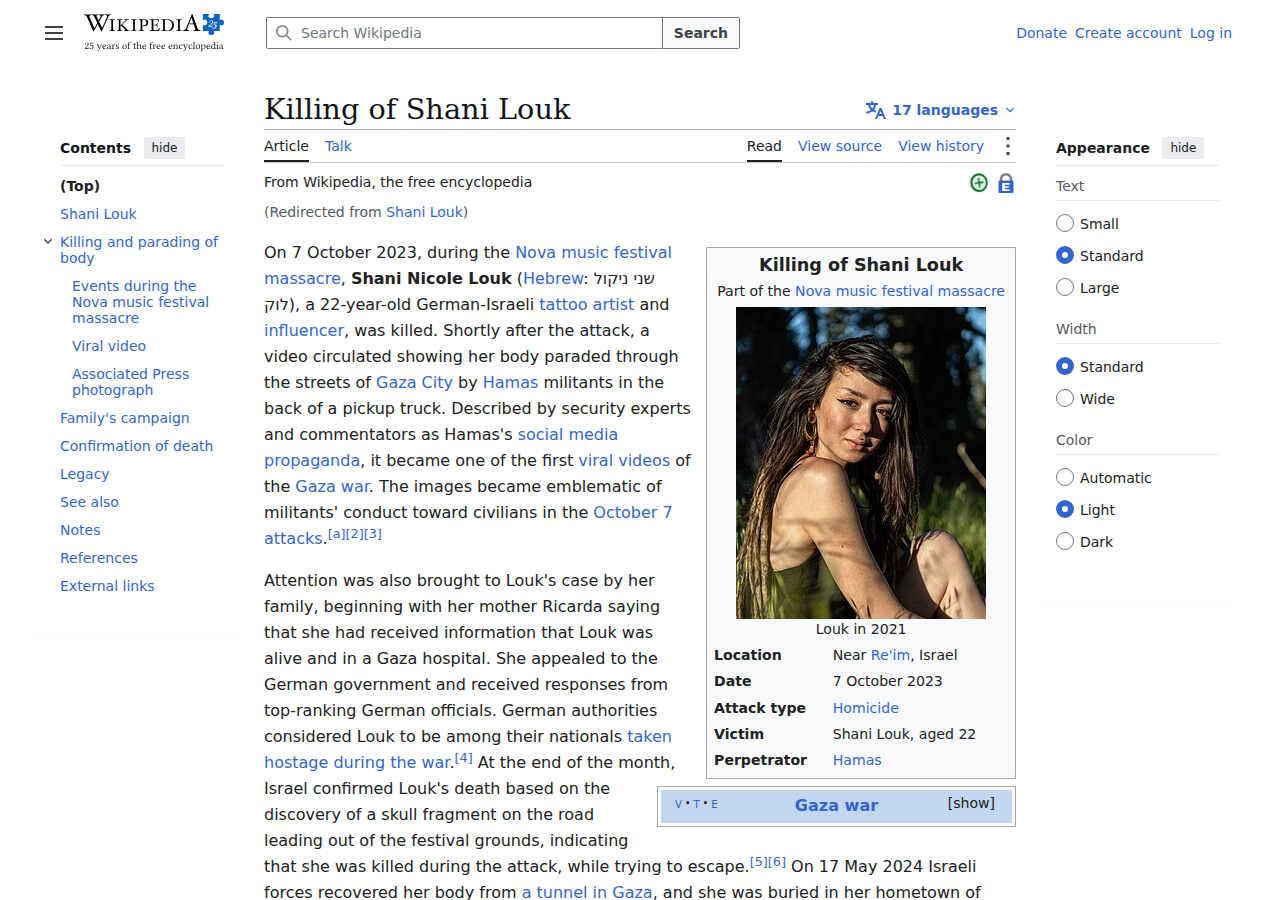
Shani Louk (22, German-Israeli) was a tattoo artist attending the Nova music festival. She was captured by Hamas on October 7.
A video taken by Hamas fighters and distributed on social media within hours of the attack showed Shani lying face-down in the back of a Hamas pickup truck, unconscious or dead, partially unclothed. Armed fighters surrounded her. Crowds lining the street celebrated as the truck passed.
The video was among the first footage seen globally that confirmed the scale and nature of the attack. Her mother Ricarda Louk (German) immediately recognized her daughter's distinctive tattoos and dreadlocks and went public in the first days — appealing directly, in a video that went viral, for anyone who knew where Shani was to come forward.
In late October 2023, Israel announced she was dead after DNA testing of a bone fragment from her skull. In May 2024, the IDF recovered her body from Gaza. She was 22.
The video of Shani Louk in the back of the truck — filmed and distributed by Hamas as propaganda — became one of the most widely shown pieces of evidence from October 7. It was shown to world leaders, at UN briefings, and in news coverage globally. Hamas distributed it. The crowd celebrated it.
Hersh Goldberg-Polin — American-Israeli, Killed in Captivity
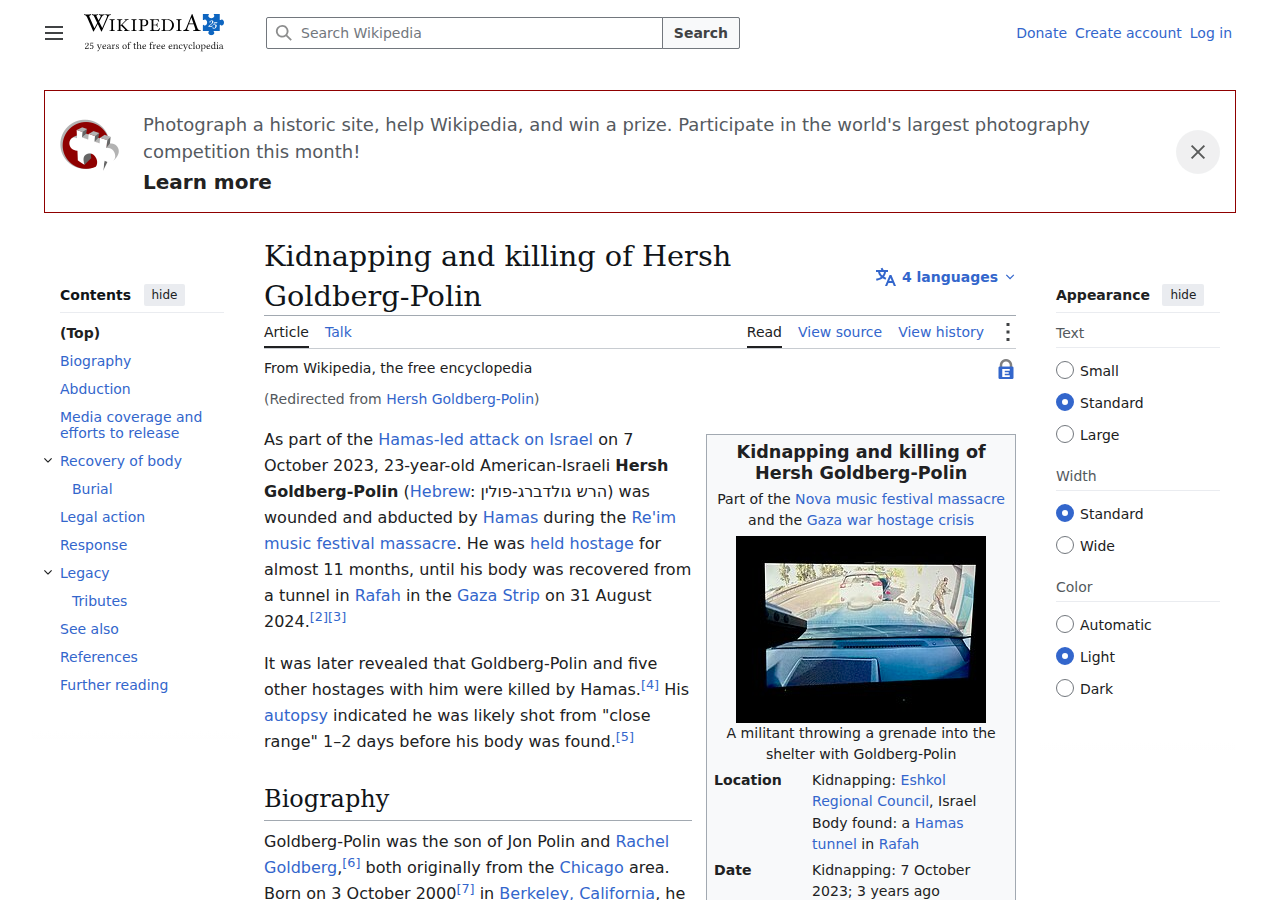
Hersh Goldberg-Polin (23, American-Israeli) was taken from the Nova music festival. During the attack, his left arm was severed by a grenade — he survived but was dragged into Gaza with the injury.
Hersh became one of the most internationally recognized hostages. His parents, Jon Polin and Rachel Goldberg-Polin (Americans), campaigned globally for his release, speaking at the 2024 Democratic National Convention.
In April 2024, Hamas released a propaganda video showing Hersh — visibly emaciated, arm amputated, clearly in very poor health — in which he made a statement under obvious duress. The video was an attempt to use him as a propaganda tool.
On August 31, 2024, IDF forces found Hersh's body in a Rafah tunnel along with five other hostages (Carmel Gat, Eden Yerushalmi, Alexander Lobanov, Almog Sarusi, and Ori Danino). Pathologists determined all six had been shot at close range — executed by Hamas as IDF forces approached. Hersh was 23 years old.
Noa Argamani — Rescued Alive
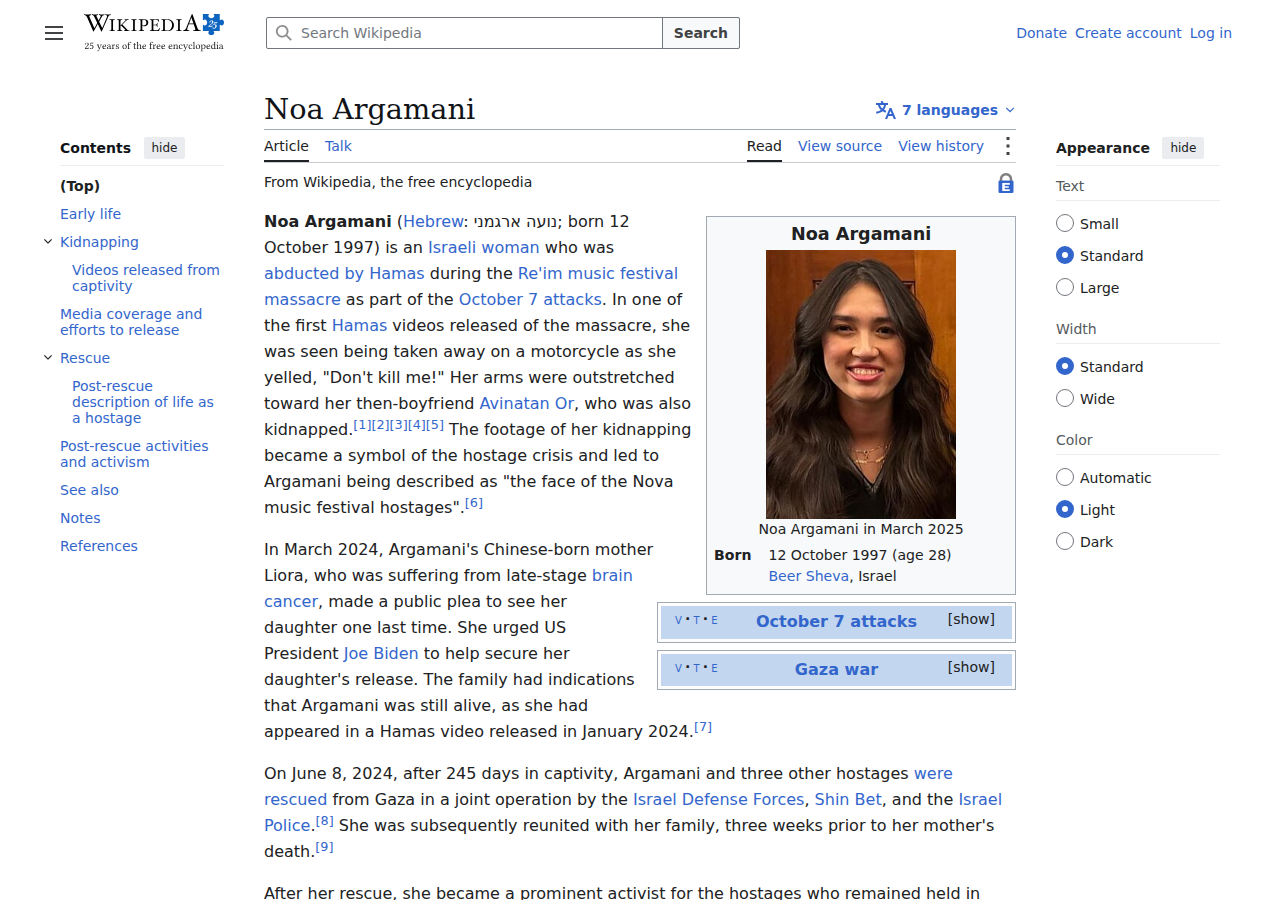
Noa Argamani (26) was taken from the Nova music festival. A video of her being abducted — reaching back toward her boyfriend Avinatan Or, who was also taken — circulated globally on October 7 and became one of the defining images of the attack. Her expression of terror was seen by hundreds of millions.
Noa's mother, Liora Argamani, was terminally ill with brain cancer throughout her daughter's captivity. Liora publicly appealed for her daughter's release, saying she did not have long to live. Noa was rescued on June 8, 2024, and Liora died a little over three weeks later, with Noa at her side.
On June 8, 2024, a complex IDF rescue operation extracted Noa from an apartment in the Nuseirat refugee camp, along with three other hostages (Almog Meir Jan, Andrey Kozlov, and Shlomi Ziv). The rescue involved undercover IDF operatives posing as civilians. Noa was reunited with her father the same day and was able to be with her mother before Liora died weeks later.
Alon Ohel, her boyfriend, remained in captivity.
IDF Soldiers Taken Hostage
Several IDF soldiers — most of them young women serving in intelligence and observation roles — were taken hostage from bases near Gaza:
Agam Berger: IDF observer soldier, taken from Nahal Oz base. Held 482 days. Released January 30, 2025. One of the last Israeli female soldiers to be released.
Liri Albag (19): IDF observer soldier, Nahal Oz base. Released January 2025 in a group exchange.
Naama Levy (19): IDF observer soldier, taken from Nahal Oz base. Released January 25, 2025, after 477 days.
Daniella Gilboa (20): IDF observer soldier. Released January 2025.
Lena Trupanov (35): Released November 2023.
Noa Marciano (19): IDF soldier, taken October 7. Hamas released a video claiming she had been killed in an IDF airstrike while in captivity. IDF forensic examination of her body, recovered in November 2023, found she had been executed at close range. Her remains were found near the Al-Shifa Hospital complex.
American Hostages
At least 12 Americans were taken hostage on October 7:
Hersh Goldberg-Polin (23, Berkeley, CA): Killed in captivity August 2024 — see above.
Keith Siegel (64) and Aviva Siegel (62): A married couple from Kibbutz Kfar Aza. Both American citizens. Aviva was released in November 2023 in the first exchange. Keith was held until February 1, 2025 — 484 days in captivity. He appeared visibly emaciated and traumatized at his release.
Gad Haggai (73) and Judy Weinstein Haggai (70): Both killed. Bodies recovered.
Omer Neutra (21): IDF soldier and American citizen, from Long Island, NY. The IDF determined he was killed on October 7 and his body taken to Gaza; it was later returned.
Itay Chen (19): IDF soldier, dual American-Israeli citizen. Killed; body held.
The U.S. State Department confirmed American nationals among the dead and hostages, though exact numbers shifted as bodies were identified and some were confirmed killed rather than held.
Thai Hostages
31 Thai agricultural workers were among the 251 hostages — the largest national group after Israeli citizens. Thailand's government engaged in direct negotiations with Hamas through Qatar for their release. Most Thai hostages were released in the November 2023 exchange, with the remaining released in subsequent phases.
The Thai hostages were agricultural workers employed on kibbutz farms in the Gaza border region — not Israelis, not Jews, not connected to the conflict. Hamas took them anyway.
The large proportion of non-Israeli hostages directly contradicts any framing of Hamas's action as a resistance operation targeting Israel's government or military — it was an indiscriminate mass hostage-taking that targeted anyone present.
Kibbutz Nir Oz — Hardest Hit Community
Kibbutz Nir Oz, a community of approximately 400 residents, was the hardest-hit single location. On October 7, Hamas killed 36 residents and took 79 hostages — nearly a quarter of the entire kibbutz population taken in a single morning.
Notable Nir Oz hostages and victims:
-
Yocheved Lifshitz (85) and Oded Lifshitz (83): Elderly couple. Yocheved, a peace activist who had driven Palestinians to Israeli hospitals for years, was taken. She was released October 23, 2023, with Nurit Cooper — among the first hostages freed (Judith and Natalie Raanan had been released on October 20). At her release press conference, she shook the hand of a Hamas militant and said "Shalom" — a gesture that generated significant international attention. Oded was not released; he died in captivity.
-
Avraham Munder, Devorah Munder, and family members from the extended Munder family.
-
Ditza Haiman (84): Released November 2023. Her father Thomas Hand had initially been told she was dead; learning she was a hostage was described as "the best worst news."
-
Hanna Katzir (77): Released November 24, 2023 (Palestinian Islamic Jihad had falsely claimed she had died); she died in December 2024 after health problems following captivity.
-
Margalit Moses (78): Released November 2023.
-
The Cunio family: David Cunio, his wife Sharon Aloni Cunio and their 3-year-old twin daughters Emma and Yuli, plus relatives. Sharon and the twins were released November 27, 2023; David and his brother Ariel Cunio were released October 13, 2025.
Children Taken Hostage
Hamas took at least 36 children under 18 as hostages. The youngest was 9-month-old Kfir Bibas.
Children taken and their fates:
- Kfir Bibas (9 months): Killed in captivity
- Ariel Bibas (4): Killed in captivity
- Emily Hand (8): Released November 2023
- Ela Cunio and Dafna Cunio (3, twins): Released November 2023
- Liam Oved (~6): Released November 2023
- Ofir Engel (18): Released November 2023
- Eitan Yahalomi (12): Released November 2023 — told reporters he had been forced to watch videos of the October 7 massacre during captivity
- Ariel Bibas and multiple other children from Kibbutz Nir Oz
Eitan Yahalomi's testimony is particularly significant: he described Hamas guards forcing him and other child hostages to watch recordings of the October 7 massacre — the slaughter of their own neighbors and families. The systematic psychological torture of children, using footage of atrocities, is documented in released hostage accounts.
Hamas Propaganda: Forced Statements Under Duress
Throughout the hostage crisis, Hamas released videos of hostages making statements — praising their captors, demanding their government negotiate, or appearing to be in acceptable health. These videos require specific context:
All hostage videos released by Hamas were made under coercion. The hostages had no ability to refuse participation; their lives were under Hamas's control. Released hostages consistently described being forced to make recordings.
Hersh Goldberg-Polin's April 2024 video: He appeared visibly emaciated, arm amputated, and made a statement under obvious duress demanding negotiation. This was Hamas propaganda designed to pressure Israel — not a voluntary statement by a free person.
Pattern of coerced statements: Multiple released hostages confirmed that they had been forced to record positive statements about their treatment — statements directly contradicted by what they described in their actual testimony after release.
Most post-release accounts describe trauma, deprivation and abuse.