The Do No Harm Database: 2,000 US Hospitals Performing Sex-Change Treatments on Minors
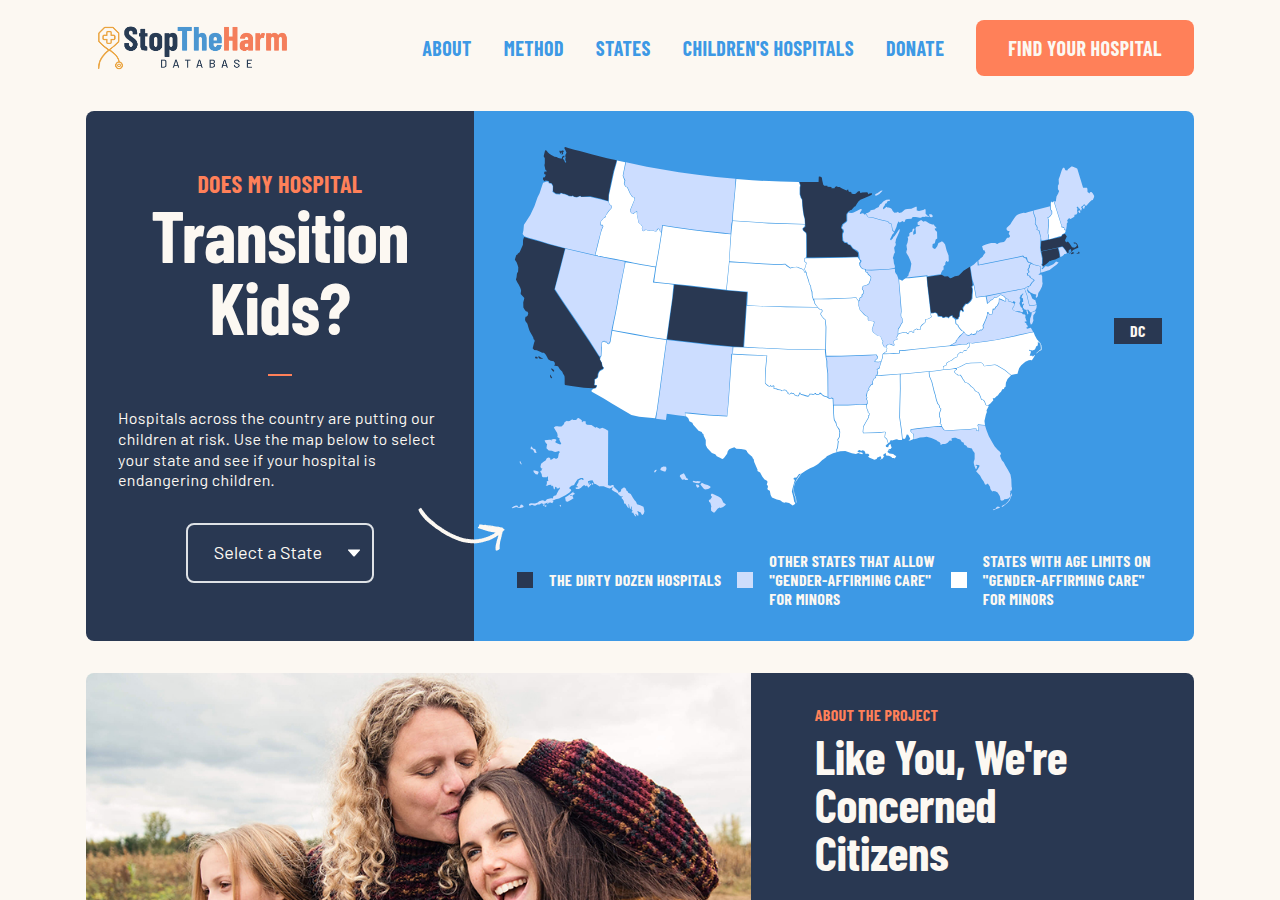
In October 2024, the nonprofit Do No Harm released a searchable database identifying over 2,000 hospitals in the United States offering gender transition treatments to minors — including puberty blockers, cross-sex hormones, and surgeries. This number is remarkable against the international backdrop: Sweden, Finland, Denmark, Norway, and the UK's NHS have all restricted or stopped the same treatments after evidence reviews found them unjustified. The US has no federal registry or age restriction on pediatric gender medicine; the 2,000 hospitals operate under state laws that vary from ban to mandate.
In October 2024, Do No Harm — a nonprofit organization comprising physicians, nurses, and healthcare professionals concerned about ideological capture of medicine — released a searchable database identifying more than 2,000 hospitals in the United States offering gender transition treatments to minors. The database lists hospital names, locations, and the specific treatments offered.
The Scale and What It Means
2,000 hospitals represents a major fraction of the approximately 6,000 hospitals in the United States. The treatments offered include:
- Puberty blockers (GnRH agonists): prescribed to children as young as 9–10 to halt puberty
- Cross-sex hormones: estrogen for natal males, testosterone for natal females, typically from age 14–16
- 'Top surgery' (mastectomy): removal of breast tissue in natal females, offered to minors in some states as young as 13–14
- Other surgical interventions: less commonly, genital surgeries, though this varies by institution
This number stands against the international backdrop of major medical institutions in other countries restricting or stopping the same treatments:
| Country | Decision | Year |
|---|---|---|
| Sweden (Karolinska) | Stopped prescribing blockers to minors except exceptional cases | 2021 |
| Finland | Restricted; treatment only for severe, long-standing, treatment-resistant dysphoria | 2020 |
| Denmark | Restricted; blockers only in research protocols | 2024 |
| Norway | Restricted; centralized national oversight | 2023 |
| UK (NHS England) | Stopped prescribing blockers to minors after Cass Review | 2024 |
| Australia | Tightened gatekeeping requirements | 2023 |
The US, alone among major Western healthcare systems, continues to expand pediatric gender medicine while the countries that pioneered it are pulling back based on evidence reviews.
The Absence of Federal Oversight
The United States has no federal registry of gender transition procedures performed on minors. The FDA has not approved puberty blockers for the treatment of gender dysphoria — they are prescribed off-label. Cross-sex hormones are also prescribed off-label for this purpose.
This means:
- No national data on how many minors are receiving these treatments
- No national data on outcomes, including regret rates and detransition
- No systematic adverse event reporting linked to gender medicine specifically
- No federal age restriction on any gender medicine procedure
The Do No Harm database represents one of the first systematic attempts to document the scale of pediatric gender medicine in the US. Before its release, advocates on both sides were arguing about a policy landscape with almost no systematic documentation.
Do No Harm is not a disinterested organization — it was founded specifically to counter what its founders characterize as politically motivated harm in medicine. But the database methodology is documented, the hospital listings are verifiable, and the basic fact that 2,000+ US hospitals offer these treatments to minors is not disputed.
The Body Integrity Question
A useful comparison: Body Integrity Identity Disorder (BIID) — sometimes called Body Integrity Dysphoria — is a condition in which a person experiences intense distress because a part of their body (typically a limb) does not feel like their own. They desire amputation to feel 'complete.' The distress is real and can be severe.
In 2000, Dr. Robert Smith at Falkirk Royal Infirmary in Scotland performed amputation surgery on two patients with BIID who requested it. The cases were widely reported and generated significant controversy. The British Medical Association and the medical community at large concluded that amputating healthy limbs to treat a psychological condition was ethically unjustifiable, regardless of the patient's sincere belief that the limb was not theirs.
The analogy to gender medicine is not perfect, but the structural question is the same: when a patient sincerely believes that a healthy body part is not their own and generates significant distress, does the physician's role require accommodation of that belief through irreversible surgery — or does it require treating the underlying distress while preserving the patient's intact body?
Western medicine arrived at a clear answer for BIID: do not amputate healthy limbs. It has not arrived at a consistent answer for gender dysphoria. The Do No Harm database documents the scale at which one approach — accommodation through irreversible intervention — is being applied to minors in the United States.
Sources & References
- 1. Matt Walsh: Do No Harm database listing 2,000 hospitals performing sex change treatments on minors. Rating 2 (real database release)
- 2. Do No Harm: nonprofit organization tracking gender medicine policies in US healthcare
- 3. The Cass Review (2024): UK's independent audit concluding evidence base is "remarkably weak"
- 4. Socialstyrelsen (Swedish National Board of Health): 2022 restriction on gender medicine for minors
- 5. Natalya Murakhver: Back from Genspect; parents and detransitioners undoing WPATH damage
- 6. Mia Hughes: Dr Robert Smith amputated healthy legs for apotemnophilia; analogy to gender surgery